
Home / Departments / Backyard Chickens
Departments · Raise
Backyard Chickens
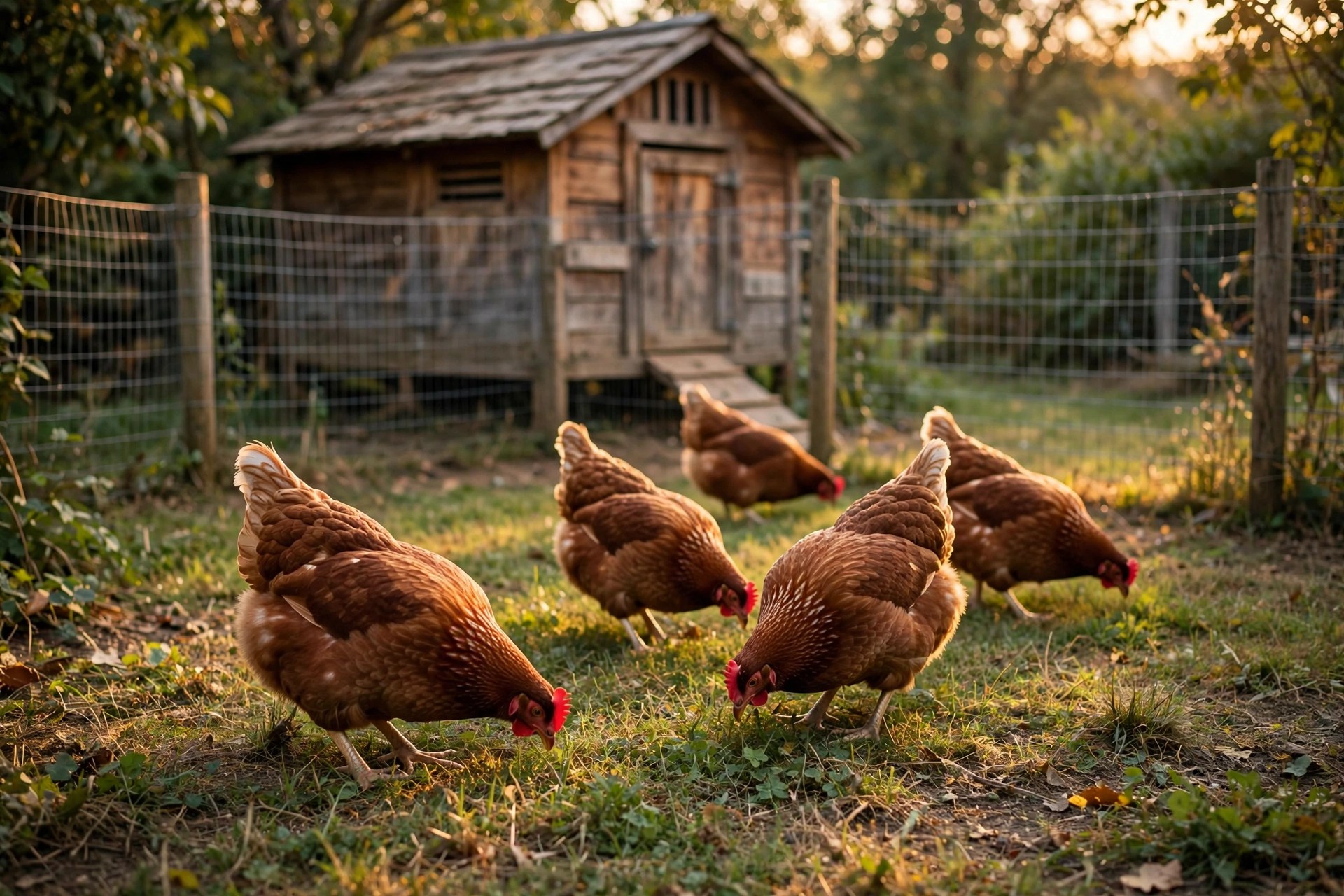
Fresh eggs, endless entertainment, and more opinions per capita than any other homestead topic. Our take: start with the boring basics done right — predator-proof housing, real feed, clean water — and skip the gadgets until year two.
Get these right first
- Predator-proof housing. Hardware cloth (not chicken wire), latches raccoons can’t work, ventilation up high, and wire buried or skirted against diggers. Everything in your county wants your chickens.
- Real feed for the right stage. Starter for chicks, grower for pullets, layer feed with calcium for laying hens. Feed is the main event; treats are dessert.
- Clean water, always. Chickens drink roughly a pint a day each and foul their water constantly — waterers that stay clean beat fancy ones.
- Bedding and space. Roughly 2–3 square feet per bird in the coop, 8–10 in the run, pine shavings or straw underfoot. Crowded birds are stressed, sickly birds.
- Know your local rules. Setbacks, flock limits, rooster bans — check before you buy, not after the neighbor complains.

Predator-proofing first
Why we flag it: chicken wire keeps chickens in; it does not keep predators out. Hardware cloth, buried or skirted, is the line that matters.
Some links are affiliate links — we may earn a commission at no extra cost to you.

Feed & water
Why we flag it: feeders that waste less and waterers that stay clean pay for themselves in a month — these are buy-once items.
Some links are affiliate links — we may earn a commission at no extra cost to you.
Before you buy a single chick
Read Backyard Chickens: What You Actually Need (and What’s a Waste of Money) — the contrarian’s checklist for separating the must-haves from the upsells.
Read the checklistGood to know
How many chickens should a beginner get?
Three to five hens is the common advice — enough for a social flock and a steady egg supply, few enough to learn on. Chickens are flock animals; never start with one.
When do hens start laying?
Usually 18–24 weeks depending on breed and season. Daylight, nutrition, and stress all affect timing — patience beats shortcuts.
Do I need a rooster for eggs?
No — hens lay without one. Roosters are only needed for fertile eggs, and many towns ban them. Check local rules first.
How much work is a small flock, really?
Plan on a few minutes daily (feed, water, egg collection, a quick look-over), a deeper clean every week or two, and seasonal attention to heat and cold. Simple, but it’s every day.

Eglu Cube Chicken Coop – 6 Large Hens
Why we picked it: The coop for people who’d rather spend Saturday with chickens than scrubbing a coop — plastic that hoses clean, fox-resistant latches, and ventilation that actually works. Expensive, but you’ll never rebuild it.
Some links are affiliate links — we may earn a commission at no extra cost to you.

OverEZ Large Chicken Coop, 15 Chicken Capacity
Why we picked it: Amish-built, solid-wood, and genuinely sized for 15 birds instead of the usual optimistic math. It arrives in panels and goes up in an afternoon with a screw gun.
Some links are affiliate links — we may earn a commission at no extra cost to you.

OverEZ 25 lb. Compact Chicken Feeder
Why we picked it: A 25-pound no-waste feeder that keeps feed dry and lets you skip days without guilt. The mounting bracket means it hangs where rats can’t have a party.
Some links are affiliate links — we may earn a commission at no extra cost to you.

OverEZ 5 gal. Compact Chicken Waterer
Why we picked it: Five gallons of clean water through nipples instead of an open dish the flock fills with bedding. Refill once a week instead of every day.
Some links are affiliate links — we may earn a commission at no extra cost to you.

PoultryNet Plus 12/48/3 Electric Netting
Why we picked it: Electric netting that moves with your rotational grazing plan and teaches raccoons manners on the first night. The fastest way to give hens fresh ground without building a fortress.
Some links are affiliate links — we may earn a commission at no extra cost to you.